
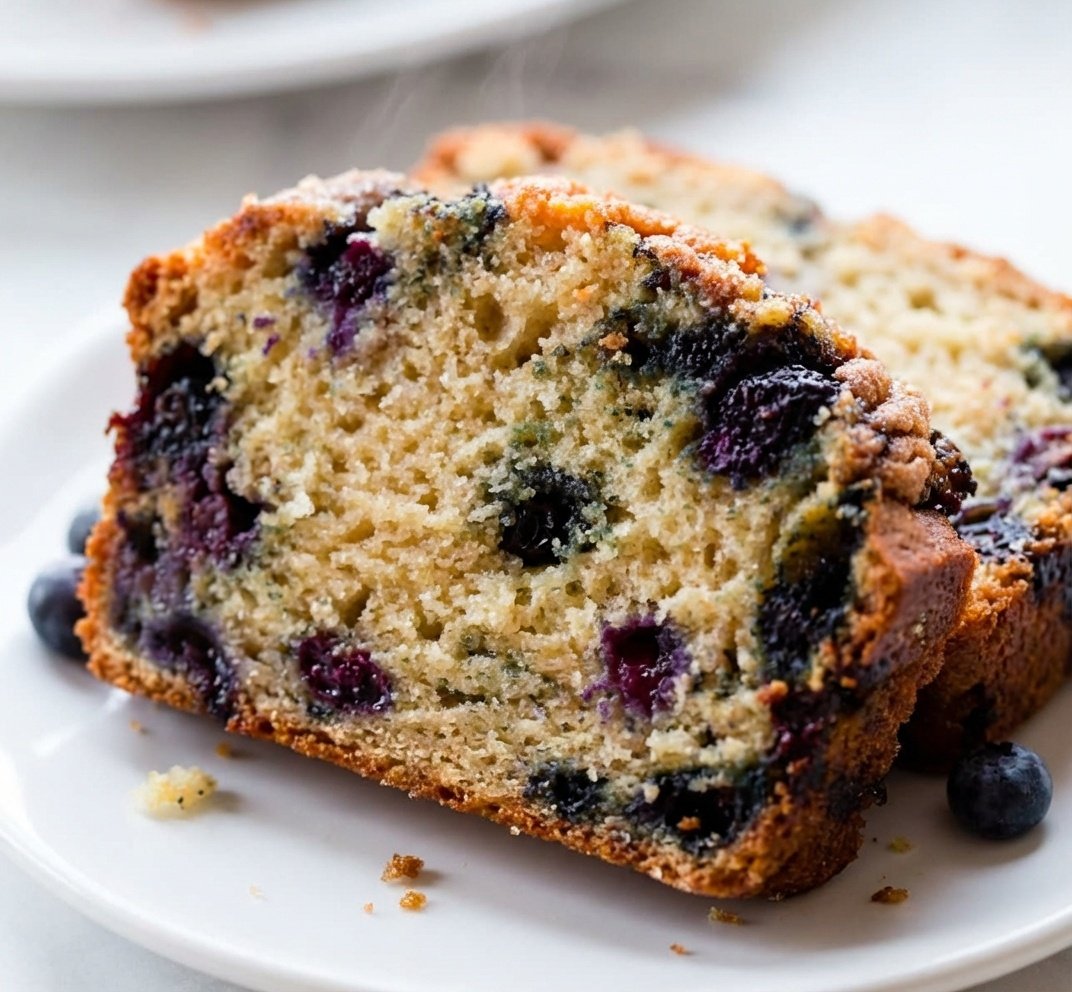
I found the inspiration for this loaf not in a far-flung bakery, but in a rain-soaked Portland café, tucked between a vintage bookstore and a record shop. I was on a cross-country road trip, my third cup of coffee was going cold, and I was craving something that felt like a lazy Sunday morning. The barista slid a plate across the counter—a slice of something so blueberry-studded it looked like a starry night. One bite, and I was hooked. It had the soul of a muffin but the comforting heft of a loaf cake. I spent the next three hundred miles of highway dreaming about how to recreate that feeling at home, to have that little pocket of peace ready for any chaotic morning.
Back in my own kitchen, the mission began. My first few attempts were… educational. Let’s just say I learned that frozen blueberries can turn a batter a startling shade of violet! But on one particularly frantic Tuesday, with a to-do list longer than my arm, I finally cracked the code. The secret wasn’t some exotic ingredient from my travels; it was the simple, humble magic of brown sugar and a generous hand with the berries. As that rich, caramel scent filled the air, the week’s stress just melted away. This bread became my quiet victory against the rush.
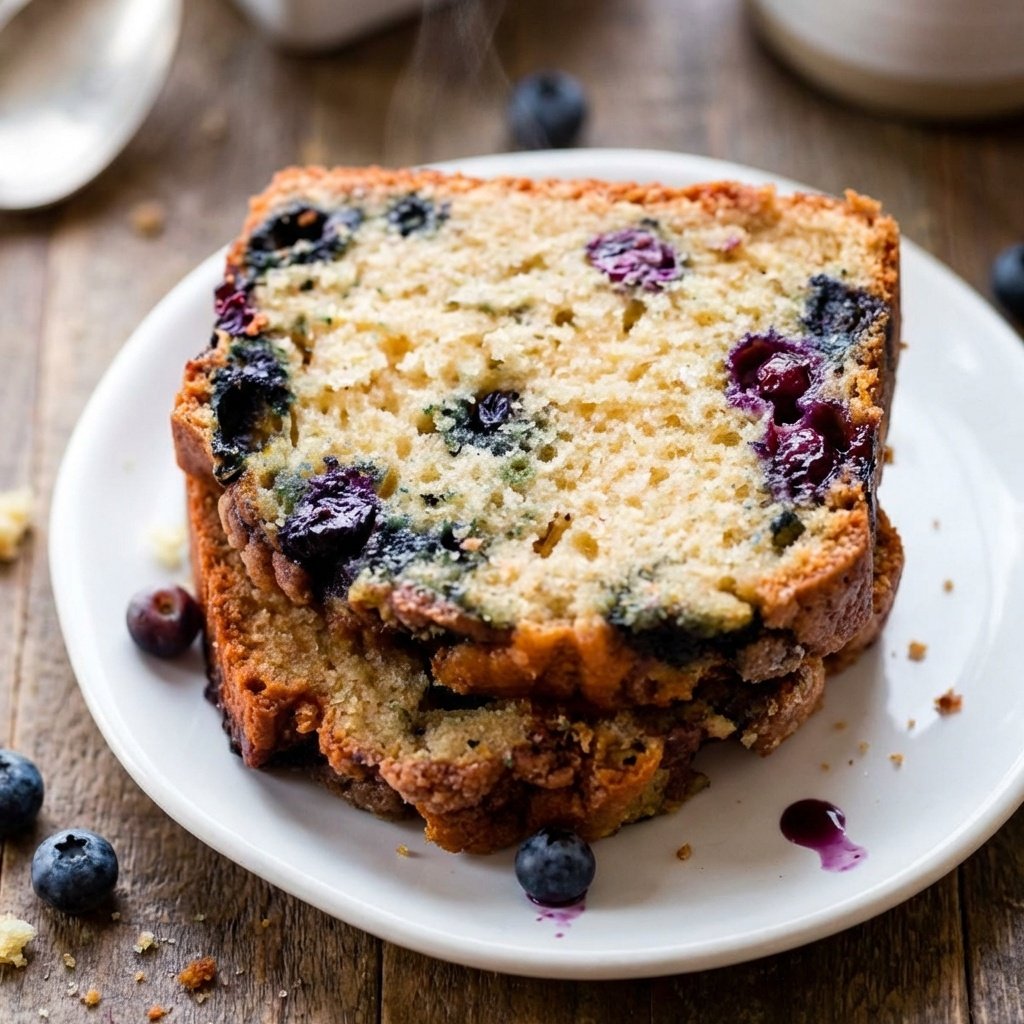
Now, it’s my not-so-secret weapon. It’s the recipe I make when I need a taste of that Portland calm, or when I simply need a guaranteed smile from my family before the day runs away from us. It proves you don’t need a passport for a moment of pure, blueberry bliss—just a bowl, a spoon, and one glorious hour. I hope it brings a little slice of heaven to your kitchen, too.
What is this recipe?
I am so glad you asked. Blueberry muffin bread is exactly what it sounds like: the familiar, comforting taste and fluffy texture of classic blueberry muffins, simply baked in a loaf pan instead of a standard tin.
This is a true "quick bread" recipe. For the uninitiated, quick breads are bread recipes that rely on chemical leavening agents—like baking soda and baking powder—rather than traditional yeast. This means there is absolutely no kneading, no rising time, and no fuss. The muffin batter goes straight from your mixing bowl to the oven in a matter of minutes. The resulting blueberry muffin bread is exquisitely soft, tremendously moist, and completely overloaded with bursting, juicy blueberries. You can enjoy it steaming warm right out of the oven, at room temperature with a smear of butter, or even chilled straight from the refrigerator.
By turning traditional muffins into bread, you bypass the tedious process of lining individual muffin cups and portioning out the batter scoop by scoop. Any muffin recipe yielding around 12 standard-size muffins easily doubles as a quick bread recipe, but we have optimized this particular blueberry muffin bread recipe to produce a gloriously tall, domed loaf that is sure to impress.
Why This is the Best Blueberry Bread You Will Ever Bake
There are countless easy fruit bread recipes on the internet, but this one stands head and shoulders above the rest. The beauty of this recipe lies in its sheer simplicity and its magnificent texture.
Unlike traditional yeast breads for breakfast that require hours of dedicated time, this recipe is incredibly forgiving. When I first tested this, I actually worried the batter was far too thick. However, I quickly learned that a thick, sturdy batter is the ultimate secret to preventing your blueberries from sinking straight to the bottom of the pan! This dense, rich batter holds onto the berries tightly, ensuring that every single slice is speckled with gorgeous, vibrant purple pockets of fruit.
Moreover, this bread easily serves as a cornerstone for breakfast breads healthy enough to keep you fueled, but sweet enough to satisfy your morning pastry cravings. With its buttery, cakey crumb and golden, sugary crust, it provides everything you love about a bakery-style muffin without requiring you to leave your house.
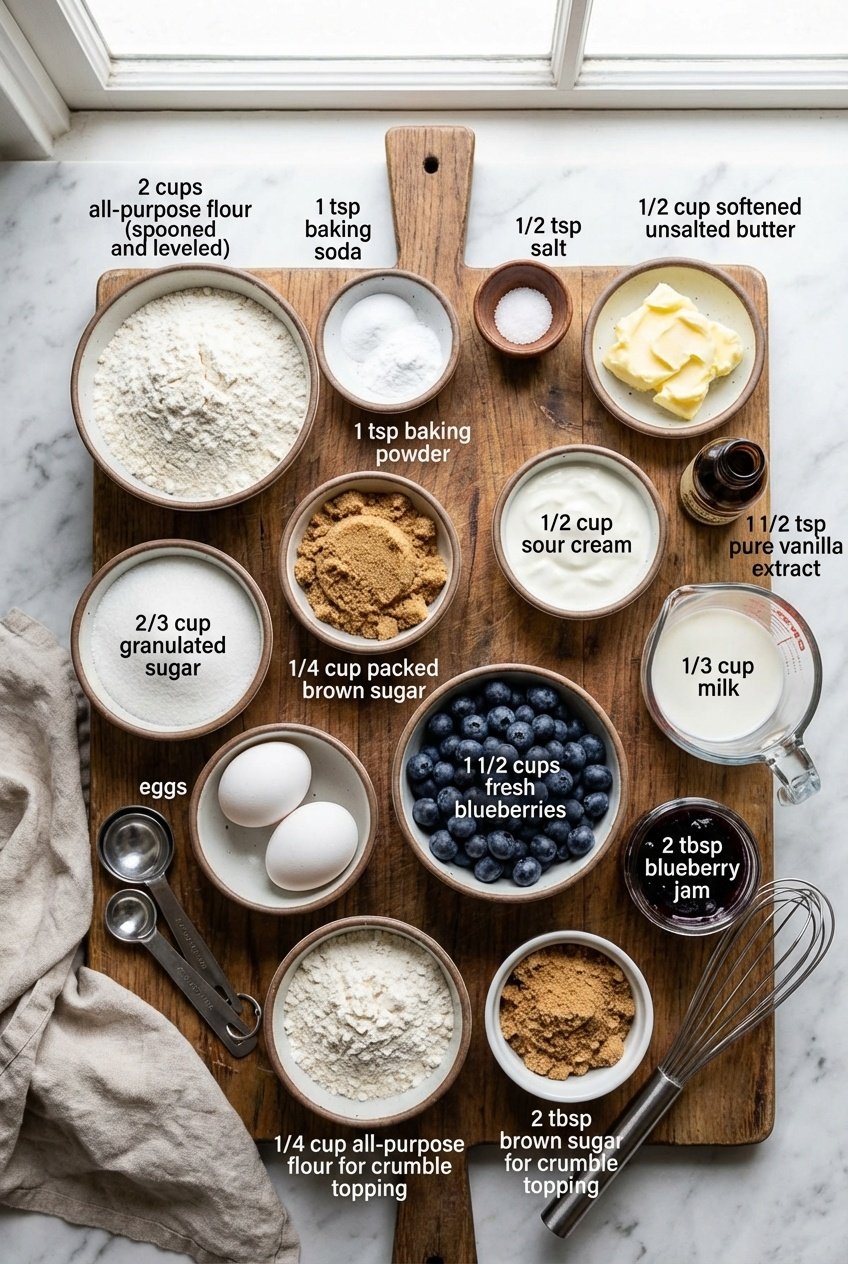
Essential Ingredients Needed
Like classic pound cakes or tender Southern biscuits, this blueberry muffin bread is a perfect example of how the most basic pantry ingredients can seamlessly transform into an absolutely unforgettable, mouthwatering dish. You likely have almost everything you need sitting in your kitchen right now.
- All-Purpose Flour: This is the absolute workhorse of quick breads. It provides the essential structure that allows the loaf to rise tall and strong. Be sure you are measuring your flour using the "spoon and level" method, rather than scooping directly from the bag, which can tightly pack the flour and lead to a dry, dense loaf.
- Baking Soda & Baking Powder: We are utilizing a crucial combination of both leaveners here. Baking soda reacts immediately with the acid in the sour cream, providing the initial burst of lift, while the baking powder gives it that sustained, slow-acting rise in the hot oven. This duo guarantees a wonderfully light texture.
- Salt: Just half a teaspoon is strictly necessary to balance the sweetness and enhance the natural tang of the berries.
- Unsalted Butter: Butter forms the base of our flavor profile and produces a beautiful, soft, cakey crumb. It should be softened exactly to room temperature—pliable but not melting.
- Granulated & Brown Sugar: We use a calculated mix of both. Granulated sugar provides the clean, crisp sweetness and helps crisp the crust, while light or dark brown sugar brings a whisper of caramel flavor and an extra dose of moisture.
- Large Eggs: Two large eggs, crucially brought to room temperature, act as the binding agents. They give the muffin bread structure, color, and undeniable richness.
- Sour Cream (or Plain Yogurt): This is the magic ingredient! Full-fat sour cream adds a tremendous amount of moisture to the bread without thinning out the batter. Its lactic acid also breaks down the gluten strands slightly, resulting in a tremendously tender crumb.
- Pure Vanilla Extract: Do not skimp here! A high-quality pure vanilla extract offers a floral, aromatic warmth that elevates the fresh berries beautifully.
- Milk: A splash of milk ensures the batter comes together smoothly. Without it, the blueberry muffin bread would simply be far too flat, dense, and heavy.
- Fresh Blueberries: The star of the show. You will need about a cup and a half. Fresh, firm, plump blueberries will bake into jammy perfection without turning your entire batter blue.
Optional Extras for Bakery-Style Flair
This blueberry muffin bread is completely awesome and satisfying on its own, but if you want to take things up a notch to bakery-level quality, I highly suggest adding one (or both!) of these fantastic toppings:
- Blueberry Jam Swirl: Swirling 2 tablespoons of high-quality blueberry jam into the top layer of the batter right before baking adds sticky, concentrated ribbons of fruit flavor.
- Cinnamon Crumble Topping: A streusel transforms any baked good. By simply combining all-purpose flour, brown sugar, a dash of cinnamon, and a bit of melted butter, you can create a beautiful, crunchy, crumbly topping that contrasts miraculously with the soft bread underneath.
Equipment Needed for Baking Success
You do not need an arsenal of complicated tools to make this quick breakfast favorite, but having the right equipment will make the process completely effortless.
- 9×5-Inch Loaf Pan: This is a crucial detail! Your pan size matters. A 9×5-inch loaf pan will provide enough volume for the bread to rise beautifully without spilling over the sides. If you try to cram this batter into a smaller 8.5×4.5-inch pan, it might overflow into your oven, creating a smoky mess. Always use a light-colored metal pan for the most even heat distribution. Dark metal pans tend to burn the edges before the center has time to cook.
- Electric Hand Mixer or Stand Mixer: Because we are creaming butter and sugar together, a mixer is essential to incorporate enough air into the batter. This aeration is what makes the bread wonderfully light.
- A Sturdy Silicone Spatula: Once the flour is added, you want to ditch the mixer and fold everything gently by hand. A silicone spatula allows you to scrape the bottom of the bowl and fold the berries in without violently crushing them.
- Cooling Rack: A wire rack is vital. Letting the bread cool in the pan forever will cause steam to build up, leaving you with a soggy bottom. Moving it to a wire rack allows air to circulate, maintaining that gorgeous, slightly crunchy exterior.
Step-by-Step Instructions
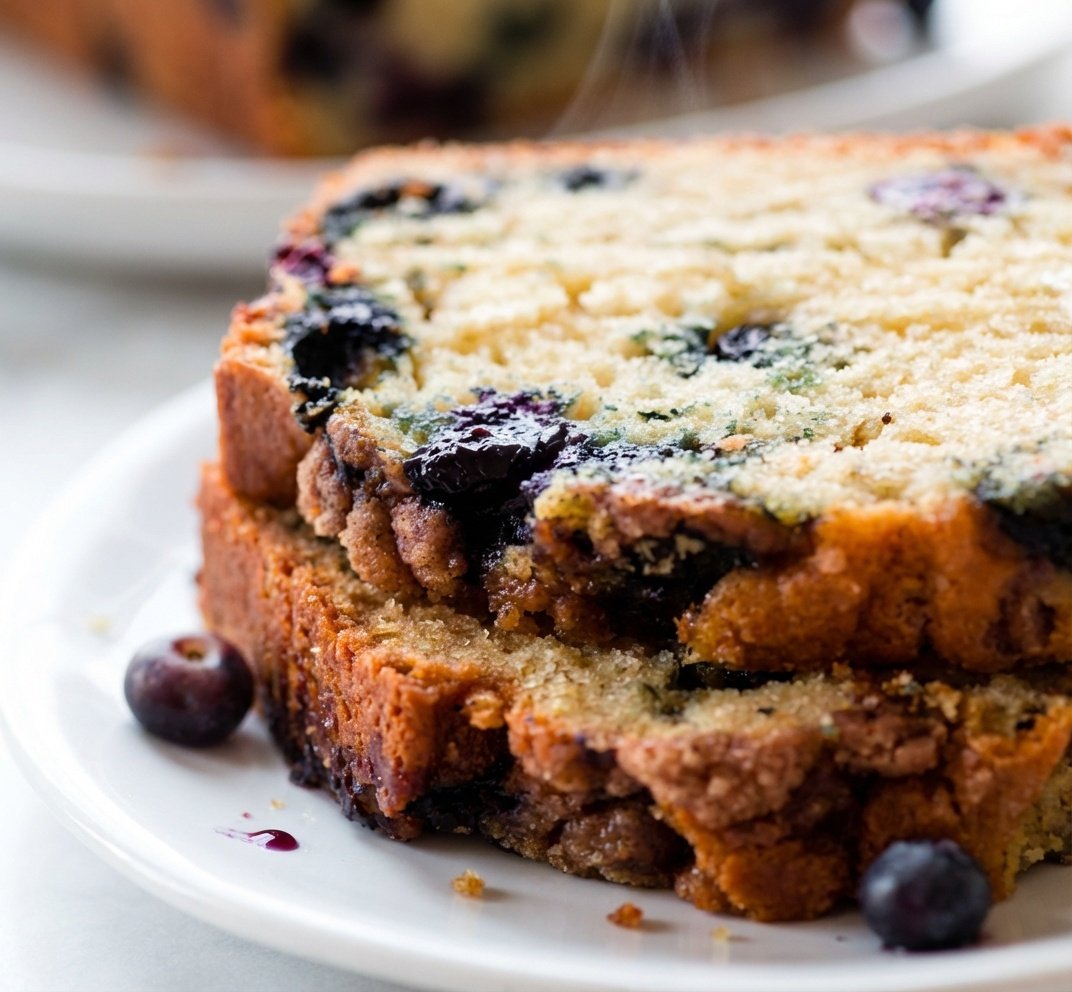
Follow these precise steps to achieve guaranteed, perfect blueberry muffin bread every single time you bake.
- Prepare the Oven and Pan: First, adjust your oven rack to the lower-third position. This ensures the top of your tall loaf doesn't get too close to the upper heating elements and burn. Preheat your oven to 350°F (177°C). Take your 9×5-inch loaf pan and generously grease it with non-stick baking spray, or rub it down with butter and dust lightly with flour. Set this prepared pan aside.
- Whisk the Dry Ingredients: In a large mixing bowl, meticulously whisk together your precisely measured all-purpose flour, baking soda, baking powder, and salt. Whisking not only combines the ingredients but also aerates the flour, contributing to a softer bread.
- Cream the Butter and Sugars: Using a handheld mixer or a stand mixer fitted with the paddle attachment, beat the softened butter, granulated sugar, and brown sugar together on high speed. You want to beat this for a full 2 minutes until the mixture looks visibly paler, smoother, and surprisingly fluffy. It should smell buttery and sweet.
- Incorporate the Wet Ingredients: Turn your mixer down to medium speed. Add the room temperature eggs, one at a time. It is vital to let the first egg fully mix into the batter before adding the second. This prevents the emulsion from breaking. Next, beat in the room-temperature sour cream and the pure vanilla extract. The batter might look slightly curdled at this stage, but do not panic; it will smooth out once the flour hits it.
- Combine Wet and Dry Gently: Turn your mixer to the absolute lowest speed. Gradually pour the dry ingredient mixture into the wet ingredients, alternating with splashes of the milk. Stop mixing the exact second that you see the last streak of white flour disappear.
- Fold in the Blueberries: Remove the bowl from the mixer. Grab your silicone spatula and gently, lovingly fold in the fresh blueberries. You want a folding motion—scraping the bottom of the bowl and bringing the batter up and over the berries. Do not vigorously stir, or you risk bruising the fruit and turning your pristine golden batter a muddy gray-green color.
- Transfer and Add Optional Toppings: Scoop the thick batter into your prepared loaf pan, smoothing the top into an even layer with your spatula. If you are using the optional blueberry jam, drop dollops of jam over the top and gently swirl them with a butter knife in a figure-eight pattern. If adding the crumble topping, sprinkle the cinnamon-butter crumbs heavily and evenly over the raw batter.
- Bake to Golden Perfection: Place the loaf pan in the preheated oven. Bake for approximately 60 to 65 minutes. Crucial visual cue: Right around the 30-minute mark, check on your bread. It should be doming beautifully and turning golden brown. At this point, loosely tent a piece of aluminum foil over the top of the pan. This ingenious trick allows the bread to keep baking in the center without the exposed crust becoming aggressively dark or burnt.
- Test for Doneness: At the 60-minute mark, test the center of the loaf with a wooden toothpick or a long wooden skewer. When the bread is completely done, the toothpick will emerge clean or with a few perfectly moist crumbs attached. If it comes out with wet, gooey batter, return the pan to the oven for another 5 minutes and test again.
- Cool Completely: Remove the fragrant, stunningly beautiful loaf from the oven. Set the pan directly onto a wire cooling rack and let the bread cool in the pan for about 30 to 45 minutes. Once it is mostly cool, gently run a butter knife around the inside edges of the pan, turn the bread out, and allow it to finish cooling completely on the wire rack before attempting to slice it.
5 Pro Tips for Making this Recipe Flawlessly
Even the easiest fruit bread recipes benefit from a little expert technique. Use these proven secrets to elevate your bake.
1. The Room Temperature Rule
I cannot stress this enough: every single refrigerated ingredient (the eggs, butter, sour cream, and milk) absolutely must be at room temperature before you begin. Why? Cold ingredients seize up when mixed with softened butter, creating a chunky, uneven batter that will result in a heavy, dense loaf. Room temperature ingredients emulsify effortlessly, trapping air that expands in the oven for a sky-high rise.
2. Toss the Berries in Flour
If you find that your blueberries tend to sink straight to the bottom of your baked goods, here is a professional trick: Reserve 1 tablespoon of the recipe's flour and toss it with your blueberries in a small bowl before folding them into the batter. The flour creates a gritty coating that grips the thick batter, suspending the berries perfectly evenly throughout the loaf.
3. Do Not Overmix the Batter
Once you combine the wet and dry ingredients, gluten begins to form immediately. If you aggressively overmix the batter, you will develop too much gluten. Instead of a moist, cakey bread, you will end up with a rubbery, tough, and chewy loaf. Mix just until the flour vanishes.
4. Wait Before You Slice
I completely understand how overwhelmingly tempting it is to slice into a piping hot loaf of sweet bread right out of the oven. However, if you slice quick bread while it is too hot, it will crumble into a mess, and the trapped steam will escape too rapidly, causing the remaining bread to dry out within hours. Letting it cool solidifies the crumb structure.
5. Watch the Tent
The foil tent at the 30-minute mark is what separates an amateur loaf from a professional one. Because this batter is so dense and packed with juicy fruit, it takes over an hour for the heat to penetrate to the very center. Without the foil tent, the outside will burn long before the inside is finished cooking.
How to Make a Big Batch
Whether you are hosting a sprawling breakfast brunch, preparing treats for a bake sale, or simply want to stock your freezer for a month of easy breakfasts, this recipe scales wonderfully.
To double the recipe, you will simply multiply all the ingredients by two. However, do not try to bake a double batch in a single, massive pan. The center will never cook. Instead, divide the doubled batter evenly between two standard 9×5-inch loaf pans. You can bake both loaves on the same rack in the oven simultaneously, ensuring there is at least two inches of space between the pans so that the hot air can circulate properly around them. The baking time will remain exactly the same (60-65 minutes).
How to Add More Ingredients (Without Ruining the Batter)
One reader previously asked an excellent question: "I need to add calories to my son's food. What happens if I add more sour cream or substitute heavy cream for the milk to make it richer?"
When augmenting baking recipes, you must be incredibly careful, as baking is an exact science based on the precise ratio of wet to dry ingredients.
If you were to arbitrarily increase the sour cream from a half cup to a full cup, you would fundamentally alter the hydration of the batter. The bread would become overly wet, heavy, and likely "claggy" in the center—meaning it would stay gummy and dense, no matter how long you baked it.
Instead of messing with the batter's delicate chemistry, here is the safest way to add richness, calories, or textural elements:
- Heavy Cream Swap: You can successfully substitute heavy cream for the milk! Heavy cream contains more milk fat and less water. The resulting bread will have a phenomenally rich, tight crumb, much like a dense pound cake.
- Fold in Nuts: Gently folding half a cup of toasted, chopped walnuts or pecans into the batter at the very end will safely add crunch and calories without altering the chemistry of the bread.
- Top it Generously: A smear of homemade cinnamon honey butter over a warm, thick slice is an absolute game-changer. It adds luxurious flavor and moisture to the final, plated product without risking the internal bake of the loaf.
Ingredient Substitutions and Variations
Flexibility is a key hallmark of truly great bread recipes. If you do not have exact ingredients on hand, or you wish to experiment, try these trusted variations:
- The Yogurt Swap: If you do not have sour cream in the fridge, plain, unsweetened yogurt makes a brilliant one-to-one substitute. Full-fat Greek yogurt is the absolute best alternative, mimicking the rich texture and necessary acidity of sour cream perfectly.
- Buttermilk: If you have leftover buttermilk and wish to use it, you absolutely can! To make this swap, replace both the sour cream and the milk with exactly 1 total cup of buttermilk. The buttermilk will still activate the baking soda while lending its signature, delicate tang.
- Alternative Berries: While this is a dedicated blueberry muffin bread recipe, this versatile master batter can handle nearly any fruit. Try swapping the blueberries out entirely for diced strawberries, raspberries, or fresh blackberries. Just remember to toss juicy fruits in flour first!
- Chocolate Chip: If you prefer decadent indulgence over fruit, omit the blueberries entirely and fold in 1 and 1/2 cups of semi-sweet chocolate chips or rich chocolate chunks.
- Healthy Swaps: To make this recipe fit into an array of breakfast breads healthy routines, you can attempt substituting half of the all-purpose flour with whole wheat flour. Just know that the bread will be slightly denser and nuttier. Unsweetened applesauce or mashed ripe bananas can also be substituted for the sour cream in a pinch, though the flavor profile will naturally change.
Storage Tips
This blueberry muffin bread boasts incredible staying power. The sour cream in the recipe acts as a preservative for moisture, ensuring the bread tastes just as divine on day three as it did on day one.
- At Room Temperature: Allow the loaf to cool completely. Wrap it tightly in plastic wrap, or place it inside a large, airtight container or ziplock bag. Store it on your kitchen counter at room temperature for up to 3 days.
- In the Refrigerator: If your kitchen is incredibly hot or humid, the high moisture content from the berries can occasionally invite early mold. In warm months, wrap the thoroughly cooled bread in plastic wrap and store it in the refrigerator for up to a full week.
- Freezing Instructions: This loaf freezes phenomenally well! You can freeze the entire loaf, or freeze it in individual slices for an instant grab-and-go morning breakfast. Make sure the bread is 100% cooled. Wrap the loaf (or the slices) tightly in one layer of plastic wrap, followed by a tight layer of heavy-duty aluminum foil to prevent freezer burn. Place it in a freezer-friendly bag, squeeze out the air, and freeze for up to 3 to 4 months.
Reheating Tips
Nobody wants cold, stiff quick bread for their morning brunch. Reviving a stored slice is quick and rewarding.
- From Room Temperature: Pop a slice into your toaster oven on a light setting, or place it in the microwave for just 10 to 15 seconds. It will become steaming hot and unbelievably fragrant.
- From the Freezer: You do not even need to thaw it first! You can place a frozen slice straight onto a microwave-safe plate and microwave on high for about 30 to 45 seconds until warmed through. Alternatively, to restore the crispy crust, thaw the loaf overnight in the refrigerator, and then warm the slices in a 300°F oven for about 5 minutes before serving.
Troubleshooting Common Blueberry Muffin Bread Issues
Baking is an art, but it relies on strict scientific rules. If your loaf did not come out exactly as pictured, diagnose the issue here:
- Why did my bread overflow the pan? This is almost always caused by using a pan that is too small. A traditional 9×5-inch loaf pan has a capacity of exactly 8 cups. An 8.5×4.5-inch pan holds only 6 cups. If you crammed an 8-cup batter into a 6-cup pan, it will volcanically erupt over the sides in the oven. Always measure the inside rim of your baking pan! Over-measuring your leavening agents (baking soda/powder) can also cause an aggressive, overflowing rise.
- Why is my bread raw in the very middle? Quick breads are notorious for tricking the eye. The outside crust can look deeply golden and perfectly firm, while the deep interior is still a raw, batter-like puddle. This usually happens because the oven was too hot, baking the exterior too fast, or because you didn't utilize the aluminum foil tent trick at the 30-minute mark to buy the center more time to cook evenly.
- Why did my blueberries sink? Two culprits here: Either your batter was far too thin (often caused by accidental over-measurement of wet ingredients), or your berries were very wet when you added them. Always pat washed blueberries bone-dry with a paper towel, and toss them in a little bit of flour before folding them in.
Frequently Asked Questions
Can I use frozen blueberries instead of fresh?
While fresh, plump blueberries will always yield the cleanest, most vibrant results without bleeding their color, you can indeed use frozen blueberries in a pinch! If you must use frozen berries, do not thaw them first. If you thaw them, they will release excessive amounts of purple liquid, turning your entire loaf a grim shade of gray-green. Take them straight from the freezer, toss them aggressively in 2 extra tablespoons of flour, fold them into the batter, and immediately put the pan into the hot oven. Note that frozen berries lower the temperature of the batter drastically, so you will likely need to extend the total bake time by 5 to 10 extra minutes.
Is this recipe good for making individual muffins?
Absolutely! Since this muffin bread originated from my master muffin recipe, it transitions back seamlessly. Simply divide the prepared batter evenly into a standard 12-cup muffin tin lined with paper liners. You will need to dramatically reduce the baking time, however. Bake them at 425°F for the first 5 minutes to get a tall, domed rise, then reduce the heat to 350°F (leaving the muffins in the oven) and bake for an additional 15 to 18 minutes
The Best Blueberry Muffin Bread Recipe
Ingredients
Main Batter
- 2 cups all-purpose flour spooned and leveled
- 1 tsp baking soda
- 1 tsp baking powder
- 1/2 tsp salt
- 1/2 cup unsalted butter softened to room temperature
- 2/3 cup granulated sugar
- 1/4 cup brown sugar packed, light or dark
- 2 large eggs room temperature
- 1/2 cup sour cream room temperature
- 1 1/2 tsp pure vanilla extract
- 1/3 cup milk room temperature
- 1 1/2 cups fresh blueberries
Optional Toppings
- 2 tbsp blueberry jam optional swirl
- 1/4 cup all-purpose flour for crumble topping
- 2 tbsp brown sugar for crumble topping
- 1/4 tsp ground cinnamon for crumble topping
- 2 tbsp unsalted butter melted, for crumble topping
Instructions
- Preheat the oven to 350°F (177°C) and adjust the oven rack to the lower-third position. Grease a standard 9x5-inch loaf pan thoroughly with nonstick baking spray.
- Whisk the all-purpose flour, baking soda, baking powder, and salt together in a large mixing bowl until evenly combined.
- Beat the softened butter, granulated sugar, and brown sugar on high speed using a stand mixer or handheld electric mixer until smooth and creamy, taking about two minutes. Reduce speed to medium and add the eggs one at a time, incorporating fully after each. Blend in the sour cream and vanilla extract.
- Mix the dry ingredients and milk alternately into the wet mixture with the mixer running on low speed. Blend just until no dry flour pockets remain, being careful not to overmix, then gently fold in the fresh blueberries.
- Swirl the optional blueberry jam into the top of the batter before baking, or combine the crumble topping ingredients with a fork and sprinkle evenly over the loaf for added crunch and flavor.
- Spoon the thick batter evenly into the prepared loaf pan. Bake for 60 minutes, placing a loose sheet of aluminum foil over the bread at the 30-minute mark to prevent the crust from over-browning.
- Test for doneness by inserting a toothpick into the center of the loaf; it should come out clean. Remove the bread from the oven and allow it to cool completely in the pan on a wire cooling rack before slicing.
Equipment
- Electric mixer
- 9x5-inch Loaf Pan
- Cooling rack